This is a great, succinct piece defining Neuromuscular Therapy (a.k.a. Trigger Point Therapy), how it works, and its benefits. Definitely worth a read!
Neuromuscular Therapy | oakworksblog.massagetables.com:
'via Blog this'
Showing posts with label pain relief. Show all posts
Showing posts with label pain relief. Show all posts
Tuesday, September 11, 2012


Wednesday, August 29, 2012
What IS a trigger point?
Follow the link below for an excellent description of trigger points. If you think your pain is from a trigger point, find a massage therapist who practices trigger point therapy, like me!
Mending Hands - Melissa Finley Massage Therapy Park Slope Brooklyn 11215 Swedish Institute: What is a trigger point?:
'via Blog this'
Mending Hands - Melissa Finley Massage Therapy Park Slope Brooklyn 11215 Swedish Institute: What is a trigger point?:
'via Blog this'
Tuesday, August 7, 2012
Massage Can Ease the Journey Through Cancer
Today is Keeping in Touch's first ever guest post! Melanie Bowen is a writer for the Mesothelioma Cancer Alliance. Melanie joined the MCA in 2011 as an awareness advocate for natural health and cancer cure initiatives. Her work includes highlighting the great benefits of alternative nutritional, emotional, and physical treatments on those diagnosed with cancer or other serious illness. She also assists in social media outreach in her efforts to spread awareness. You can check out Melanie's blog for the MCA here.
Massage has some relaxing effects while relieving muscular discomfort and promoting flexibility. Special techniques can relieve pain, fatigue and stiffness. If you are suffering from any form of cancer such as breast cancer, mesothelioma, lymphoma, skin cancer, colon cancer, prostate cancer or any of the other 100 types of the disease, massage can have a powerful effect on your recovery. Massage therapy can benefit you whether you are suffering from cancer, going through treatment or remission.
The method of massage involves the manipulation of the muscles and soft tissue, rubbing and kneading in order to promote relaxation while enhancing the functions of the body tissue. Oncologists massage therapists are specially trained to provide you the proper technique at the appropriate pressure, while providing support of mind, body and spirit through the fun and relaxation of oncology massage.
Each patient can withstand varying degrees of pressure and certain pressure points, depending on your type of cancer and pain level. The therapists and doctor work closely together to put together the perfect plan for you personally, according to your specific needs. Massage works in conjunction with the treatment as prescribed by your doctor.
Your massage therapist will consider your treatment and medical situation as well as your desired outcome in order to help you deal with the cancer. Massage can be effective and safe in promoting recovery during these challenging times. The premise behind oncology massage is to ease your journey through cancer with support from family, loved ones, friends and caregivers.
Massage can improve your quality of life while managing your symptoms of pain. Research has proven that the power of massage can relieve your pain and anxiety, reduce depression and give you more strength and stamina to move forward.
Treatment for cancer brings about its own set of side effects such as fatigue, nausea, pain, bowel problems, infection, memory disorders, depression and other physical and emotional difficulties. The power of massage can relieve many of these side effects to bring relief from nausea, pain, fatigue and emotional disabilities associated with cancer and the treatment plan.
Massage helps in maintaining inner strength and a positive attitude in order to fight the cancer. Working with your oncology massage therapist will help to provide you greater mental and emotional stability while also loosening tension and muscles to find pain relief and more comfort in life.
Other benefits include an improved blood circulation, removal of toxins in the body as well as stabilizing your blood pressure. Massage does not claim to be a cure for cancer but rather give you mental and emotional stability and well-being to beat this demon. Alleviating the aches and pains that linger in your lymph nodes and tiring muscles can bring a great sense of relief for you, along with the support of loved ones and family.
Massage therapy along with the prescribed treatment plan of your doctor, good nutrition and exercise can bring about a quicker recovery. The power of massage can provide you the overall health and well-being necessary to return to your normal way of living with more energy.
Massage has some relaxing effects while relieving muscular discomfort and promoting flexibility. Special techniques can relieve pain, fatigue and stiffness. If you are suffering from any form of cancer such as breast cancer, mesothelioma, lymphoma, skin cancer, colon cancer, prostate cancer or any of the other 100 types of the disease, massage can have a powerful effect on your recovery. Massage therapy can benefit you whether you are suffering from cancer, going through treatment or remission.
The method of massage involves the manipulation of the muscles and soft tissue, rubbing and kneading in order to promote relaxation while enhancing the functions of the body tissue. Oncologists massage therapists are specially trained to provide you the proper technique at the appropriate pressure, while providing support of mind, body and spirit through the fun and relaxation of oncology massage.
Each patient can withstand varying degrees of pressure and certain pressure points, depending on your type of cancer and pain level. The therapists and doctor work closely together to put together the perfect plan for you personally, according to your specific needs. Massage works in conjunction with the treatment as prescribed by your doctor.
Your massage therapist will consider your treatment and medical situation as well as your desired outcome in order to help you deal with the cancer. Massage can be effective and safe in promoting recovery during these challenging times. The premise behind oncology massage is to ease your journey through cancer with support from family, loved ones, friends and caregivers.
Massage can improve your quality of life while managing your symptoms of pain. Research has proven that the power of massage can relieve your pain and anxiety, reduce depression and give you more strength and stamina to move forward.
Treatment for cancer brings about its own set of side effects such as fatigue, nausea, pain, bowel problems, infection, memory disorders, depression and other physical and emotional difficulties. The power of massage can relieve many of these side effects to bring relief from nausea, pain, fatigue and emotional disabilities associated with cancer and the treatment plan.
Massage helps in maintaining inner strength and a positive attitude in order to fight the cancer. Working with your oncology massage therapist will help to provide you greater mental and emotional stability while also loosening tension and muscles to find pain relief and more comfort in life.
Other benefits include an improved blood circulation, removal of toxins in the body as well as stabilizing your blood pressure. Massage does not claim to be a cure for cancer but rather give you mental and emotional stability and well-being to beat this demon. Alleviating the aches and pains that linger in your lymph nodes and tiring muscles can bring a great sense of relief for you, along with the support of loved ones and family.
Massage therapy along with the prescribed treatment plan of your doctor, good nutrition and exercise can bring about a quicker recovery. The power of massage can provide you the overall health and well-being necessary to return to your normal way of living with more energy.
Tuesday, June 26, 2012
A Great Exercise to Erase Low Back Pain
Check out the following short article about correctly picking something up off the floor. And then watch toddlers as they move around. They do it all correctly - and it's all instinct. We actually get worse as we age, even though no one tells us to. Teach your kids to ignore adults in this regard and to move as they already do based on instinct - their gut feeling is right!
A Great Exercise to Erase Low Back Pain:
'via Blog this'
A Great Exercise to Erase Low Back Pain:
'via Blog this'
Tuesday, February 21, 2012
Self-care for neck pain
Seven Self-Care Tips for Clients with Neck Pain
Above is the link to the full article, and I encourage you to read it as it goes into more depth on the causes of neck pain, which makes the preventive tips below make more sense. It also includes a list of references.
1. Stress Relief - While stress will aggravate neck pain, relaxation can ease it. Suggestions for accomplishing this feat include deep abdominal breathing, meditation, visualization and other relaxation techniques.
2. Frequent Breaks - Even though sustained positions foster muscle tightness, this practice is deeply ingrained in our culture. If driving long distances or working long hours in one position, make sure to take frequent breaks. Breaks are best used to stretch, breathe deeply, take a sip of water and return to proper posture.
3. Exercises and Stretches - While some must be prescribed by a physical therapist, a massage therapist can suggest exercises and stretches for the neck as long as they don't cause pain. Exercises and stretches help reduce pain by restoring muscle function, optimizing posture to prevent overload of muscle and increasing the strength and endurance of the neck muscles. These can include shoulder blade rolls/squeezes/shrugs, cervical extension/flexion, rotation, stretching the front wall chest muscles, strengthening the shoulder muscles and isometric exercises.
 4. Hot and Cold Therapy - Most practitioners suggest alternating heat and cold to help a stiff, painful neck. Reduce inflammation by applying a cold pack for up to 20 minutes several times a day. Alternate this approach with heat, either a warm shower or a hot pack, for up to 20 minutes. Heat can help relax sore muscles, but it can aggravate inflammation if the area is red, warm and swollen.
5. Evaluate Ergonomics - Adjusting home or workplace conditions to relieve unnecessary neck stress can go a long way in preventing cervical discomfort. This includes proper positioning of a desk, chair, computer and phone so the screen is at eye level, knees are slightly lower than hips, arms rest comfortably on armrests and the neck is in a relaxed neutral position while on the phone.
6. Sleep Deliberately - Since a lot of neck pain can arise from poor positioning during sleep, deliberately planning a sleep position can prevent a painful neck. Avoid sleeping on the stomach and use a pillow that supports the natural curve of the neck. Back sleepers are advised to use a rounded pillow (neck roll) under the curve of the neck, with a flatter pillow cushioning the head. Side sleepers should keep their spine straight by using a pillow that is higher under the neck than the head. The goal is to prevent overnight neck flexion.
7. Sock and Tennis Balls - A simple homemade device can be used for self-administered cervical acupressure. Put two tennis balls in a sock and tie off the sock so the balls are stationary. Place the tennis balls under the occiput (base of the skull) so they are pressing on the hollows under the skull on either side of the spine (Gallbladder 20) for about 10 minutes. Lying on this device can help relax taut, posterior neck muscles.
Tuesday, October 18, 2011
Myofascial trigger points
Imagine this: you feel a deep, spreading pain at your right shoulder. It feels better after a good night's rest, but as your day progresses, the knot-like feeling creeps up on you without invitation. The pain is sometimes very intense and sometimes moderate. And you note that sometimes it travels to different areas of your body.
These annoying little knots in our muscles and connective tissues are called myofascial trigger points. The "myo" part of the word means muscle and "fascial" refers to the elastic, connective tissue that runs throughout the body.
There are two basic types of trigger points: active and latent. Latent trigger points don't cause pain except when pressed. When latent trigger points become triggered and awakened by stress or injury, they become active. Active trigger points radiate (or refer) pain from muscle or fascia in a characteristic pattern. For example, trigger points in the shoulders often send pain and tension throughout the shoulders and up into the lower neck. Likewise, trigger points in your buttocks can refer pain down the leg just as in sciatica.
Two doctors, Dr. Janet Travell and Dr.
David Simons, revolutionized our understanding of trigger points. They mapped out the entire body and standardized a pain referral pattern for each muscle. Trigger points usually follow these maps, though some people have unusual pain patterns. In either case, deep breathing, stretching, applications of heat or cold, and massage can help.
A case in point
 Travell and Simons say that the shoulders are the area most affected by trigger points. The levator scapula muscle connects your shoulder blade to your neck and is responsible for elevating your shoulder blade. It is especially prone to trigger points, and can refer pain to the neck, around the shoulders and down into the mid-back. Note the picture of the shoulders to the left. If you have pain in the shaded area, you may have trigger points (indicated by the X's) in the levator scapula.
To help relax this muscle, focus on the shoulder area. Breathe deeply and begin to let go of the tension with each exhale. Then inhale, shrug your shoulders up toward your ears, squeeze, and hold them to the count of three. Release them completely on the exhale. Repeat three to five times, then relax and breathe slowly and deeply.
Tuesday, October 4, 2011
Sciatica & Massage
If you have sciatica, or leg pain, consider massage therapy. It's such a natural, relaxing way to find relief!
Remember, though, that sciatica is a symptom of something else, and not a medical condition itself. It simply refers to leg pain, numbness or tingling caused by compression or injury to the sciatic nerve, the largest nerve(s) in our bodies. (We have one on each side; they start at the end of our spinal column and run through our hips and down our legs.)
Compression of the sciatic nerve is sometimes due to tense musculature. Hmmm ... what could help relieve tense muscles, I wonder?
Tuesday, August 9, 2011
Low Back Pain: Five Tips for Massage Therapy Clients
Massage therapy has been a coveted way to relieve low back pain for as long as historical documents on the subject exist. However, a new study commands an even greater level of respect for massage's effectiveness at helping this problem. As published in a July 2011 edition of the Annals of Internal Medicine, a study funded by the U.S. National Center for Complementary and Alternative Medicine evaluated the effectiveness of massage therapy for chronic low back pain.
In this study, over 400 participants with chronic low back pain either received weekly whole-body massages for relaxation, weekly massages that focused on specific muscle problems around the lower back and hips, or usual care. Those receiving usual care typically took pain medications or muscle relaxants, saw doctors or chiropractors, received physical therapy or simply did nothing. The researchers found that both types of massage therapy were much more effective at relieving low back pain than usual care. After 10 weeks of intervention, the following was reported:
• 36 percent of patients receiving weekly whole-body relaxation massage said their pain was nearly or completely gone.
• 39 percent of patients receiving weekly massage that focused on specific muscle problems around the lower back and hips said their pain was nearly or completely gone.
• Just 4 percent of patients receiving usual care said their pain was nearly or completely gone.
Tips to Prevent Back Pain
Massage therapy's ability to relieve back pain is rarely disputed, but therapists can also help their clients prevent low back pain recurrence. The following suggestions can help prevent low back pain from returning:
Massage therapy's ability to relieve back pain is rarely disputed, but therapists can also help their clients prevent low back pain recurrence. The following suggestions can help prevent low back pain from returning:
1. Quit Smoking - Smoking cigarettes seems to worsen just about every known health condition, including low back pain. Likely because smoking hinders blood circulation, experts assert that smokers are 30 percent more likely to suffer from back pain than non-smokers.
2. Get Up and Move - Whether behind a wheel, in front of a computer or just watching TV, sitting for extended periods of time is one of the worst positions for the low back. The spinal discs are spongy and cushion the vertebrae, but they naturally have poor blood supply. Upon getting up and moving, fluid circulates around the discs. On the other hand, sitting starves the discs of fluid making them vulnerable to damage.
3. Stretch and Strengthen Core Muscles - Most physicians agree that regular stretching and strengthening of the core muscles constitute the most important lifestyle practices for preventing back pain. Advise clients in a safe stretch and strengthen program with a focus on back, abdominal, oblique and leg muscles.
4. Lift Properly - Those who lift heavy objects for a living are well aware of the importance of body mechanics, but the rest of us may not be. Always engage abdominal muscles during a lift, bend the knees, keep back straight, don't bend at the waist, keep object close to the body, do not hold an item higher than armpits or lower than knees, don't move something over 20 percent of your body weight, don't pivot, twist or turn while lifting, point feet at the item being lifted, and only change direction with the feet (not the waist). These instructions will help prevent back muscles from being strained.
5. Wear Back-Friendly Shoes - Supportive, low-heeled or flat shoes are crucial for preventing back injury. Although high heels may be high fashion, they increase the arch in the low back. This spinal alignment change increases one's susceptibility to low back injury.
Wednesday, June 22, 2011
Pathology and Massage: Anterior Shin Splints
What are shin splints?
Shin splints is a blanket term for a number of lower leg problems. It causes pain and sometimes swelling on the lower leg. Shin splints is an inflammation of the periosteum (the membrane that lines the outer surface of all bones) and the attached muscle fibers. The muscles attached to the tibia are tearing loose. Generally, when someone gets shin splits, it is due to excessive or repeated pounding, or “impact loading”, on hard surfaces during athletic activities, such as running or tennis. The condition worsens with the actions the affected muscles do. Other technical terms a doctor might use when diagnosing shin splints are idiopathic compartment syndrome, acute and chronic exertional compartment syndrome, periostitis, traction periostitis, tibial fractures, and medial tibial stress syndrome. These different titles account for location of pain and severity of the condition. Most commonly, shin splints are medial or lateral. Lateral shin splints are also called anterior shin splints, because the anterior muscle compartment is lateral to the tibia.
Which muscles or other structures are involved?
Principally, the tibialis anterior muscle and the tibia are involved in anterior shin splints. Tibialis anterior originates along the lateral surface of the tibia. Tibialis anterior is responsible for dorsiflexion (flexing your foot toward your leg) of the ankle and sustains tears along the tibia when overused or constantly impacted. It’s possible the interosseous membrane could also be involved as tibialis anterior also originates there.

How are shin splints assessed?
Chances are, if a client had shin splints, I would know. For instance, if they stood up and grimaced and then proceeded to gingerly walk across the room. They may even limp or hobble a bit. Walking would be uncomfortable for anyone with shin splints. If you superficially massaged the anterior leg muscles, it would probably feel tender, but good; a deeper massage would most likely be uncomfortable or painful. Lesser muscle injuries would not be visible on the leg, nor would they be palpable, but more severe injuries would exhibit red, hot puffiness around the tibia. Pain along the tibia is an indication, and may be superficial or deep, mild or severe. The location of the pain would indicate the injured muscles. Someone with anterior shin splints may describe the pain as an ache that runs the length of the lateral tibia.
How are shin splints treated?
Shin splints require first and foremost, rest. Ice, stretching, strengthening and massage are also indicated. Massage is only contraindicated if the condition is advanced: that is, if the leg looks and feels hot and swollen, or is extremely painful. Once the inflammation and pain begin to subside, massage is beneficial. If the condition does not improve within a couple of days, it could be a sign of a more serious condition and requires medical attention. Massage is an excellent treatment as it increases circulation and releases adhesions. Massage can also prevent shin splints from advancing into more serious complications, such as exertional compartment syndrome. Proper stretching is a necessary preventative measure. Plantarflexion (pointing the foot down) and eversion (pointing the foot in toward the mid-line of the body) will stretch the tibialis anterior muscle. Stretching the lower leg muscles can be difficult through exercise alone, but massage can work every inch. Regardless of where the injury is, all the lower leg muscles should be stretched and massaged. The feet should be worked as well, as the lower leg muscles insert into points throughout them. Myofascial Release is a desirable modality for shin splints, as it can release the fascia binding all four muscle compartments. Plus, as it works superficially, it would most likely be more comfortable than Deep Tissue techniques.
These pictures are from Trail Guide to the Body, Second Edition, by Andrew Biel, illustrated by Robin Dorn (both massage therapists) and published by Books of Discovery.
These pictures are from Trail Guide to the Body, Second Edition, by Andrew Biel, illustrated by Robin Dorn (both massage therapists) and published by Books of Discovery.
Thursday, February 3, 2011
The cumulative effects of massage
Aah...you finally got in for your massage. As you relaxed, your headache or low-back pain receded. You also may have noticed your anxieties weren’t hammering at you like they were when the massage began.
Like many of us, you may have experienced those times when a single massage provided amazing, short-term relief from pain or stress. But as you returned to your normal activities, the chronic pain and tension came creeping back over time, contributing to headaches or flare-ups of fibromyalgia, TMJD or old injuries.
Your chronic discomforts and conditions can actually improve long term with a series of massage sessions. With regular massage, you may also notice that you don’t feel the effects of excess stress as much or that, due to increased body awareness, you use your body in ways that cause less strain. You may observe that your old pain patterns aren’t kicking in to the degree that they used to. Gradually, you may enjoy an increased sense of overall well-being and the awareness of what it feels like to be truly relaxed.
Tuesday, August 24, 2010
Back to School Back Pain
Here is a preview article from my next newsletter. To receive it directly in your email inbox, you can sign up here.
Ergonomics for children and grown-ups, too
Pediatricians, physical therapists, and massage therapists are seeing more young patients complaining of back and neck pain. The culprit is often overloaded backpacks.
Backpack weight
According to the American Chiropractic Association, backpack weight is contributing to pain earlier than in previous generations. By 4th or 5th grades, children are packing textbooks and instruments as well as cell phones, iPods and even lap tops.
Backpack guidelines
You can help your child strategize about how to prevent or recover from injury and pain from carrying too much weight.
1. Limit backpack weight to 15% of your child's weight. If your child weighs 75 pounds, the maximum backpack weight should be 10 pounds. If 125 pounds, your child should carry 18 pounds or less.
2. Use a backpack with wide straps, and wear it on both shoulders.
3. Only pack what is necessary. Maybe they don't need to carry all their books every day.
4. If they have a locker, they can leave the books they aren't using until needed. If they don't have one, could they get a second copy of textbooks to leave at home?
5. Some children use a pack on wheels.
Adults, too
Grown-ups, you may also be busily moving around -- from home to work to school or gym with a backpack, laptop case or messenger bag slung over your shoulder.
Use the guidelines above to prevent injury and pain as you go about your daily activities this fall.
Ergonomics for children and grown-ups, too
Pediatricians, physical therapists, and massage therapists are seeing more young patients complaining of back and neck pain. The culprit is often overloaded backpacks.
Backpack weight
According to the American Chiropractic Association, backpack weight is contributing to pain earlier than in previous generations. By 4th or 5th grades, children are packing textbooks and instruments as well as cell phones, iPods and even lap tops.
Backpack guidelines
You can help your child strategize about how to prevent or recover from injury and pain from carrying too much weight.
1. Limit backpack weight to 15% of your child's weight. If your child weighs 75 pounds, the maximum backpack weight should be 10 pounds. If 125 pounds, your child should carry 18 pounds or less.
2. Use a backpack with wide straps, and wear it on both shoulders.
3. Only pack what is necessary. Maybe they don't need to carry all their books every day.
4. If they have a locker, they can leave the books they aren't using until needed. If they don't have one, could they get a second copy of textbooks to leave at home?
5. Some children use a pack on wheels.
Adults, too
Grown-ups, you may also be busily moving around -- from home to work to school or gym with a backpack, laptop case or messenger bag slung over your shoulder.
Use the guidelines above to prevent injury and pain as you go about your daily activities this fall.
Thursday, June 10, 2010
Self-Care for Back Pain: Exercises to Help the Healing Process
Spotted on the Galactic Interweb! I wanted to share as this is an excellent practical application for back pain care that you can do at home.
~Stephanie
Original Source:
To Your Health May, 2010 (Vol. 04, Issue 05)
Why Movement Matters
 The problem with this is that when you stop moving, when you are still, everything tightens up, circulation slows down, and pain chemicals accumulate in your muscles and joints. It's like waking up after sleeping in a cold room on a lousy mattress with a draft. If you get moving, you'll typically start to feel better.
So, here's the number-one rule to remember: Don't stop moving when you hurt. I know, you are in pain and afraid to move, and sudden movements may cause your back to "grab" or spasm. I am not telling you to ignore the pain. What I am saying is that you need to find movements that will ease your pain. In many cases, the most important thing to do when you hurt is to keep moving. The body often tightens up and limits your motion. If you find a motion that doesn't hurt you, it will probably help you. When you are hurting, you may not be able to do your usual activities, but you must keep moving. Try walking slowly, especially on flat and even ground. Try walking up a hill (you can walk up a hill without walking down, on a treadmill). Try swimming or simple motions in chest-deep water. Try basic pelvic tilts, staying within a pain-free range.
Here are some basic principles. The movement should be pain free (or at least cause minimal pain while being performed). When you have finished doing the exercise, your pain should be somewhat diminished. You should feel that you can move more freely. Your back should feel straighter and less "kinked."
 Backward bending is a great exercise when you're suffering from low back pain. Start on the floor or other stable surface (top picture), then slowly raise your upper body up while keeping your lower body stationary (bottom picture). The final step involves extending your arms up (much like a push-up). Basic Exercises for Low Back Pain
Here are two basic examples of self-care exercises that have stood the test of time. Many of my patients have found variations on these and other types of movements that act as "reset" buttons for their typical pain. You are the one living in your body; you are the most likely one to know what is working for you.
Lower back diagnosis is often very difficult and confusing. For the sake of this article, let's divide low back pain exercises into two categories: exercises that make your back feel better when you bend backward, and exercises that make your back feel better when you bring your leg toward your chest.
Backward Bending (extension of the lumbar spine). An exercise called the McKenzie extension is the first thing you should try if you have sciatica (pain running down your leg). If these exercises work, your pain will diminish and may centralize, which is a good thing. Centralize means your pain goes less far down your leg, and you may feel it closer to the spine. Bending backward may not feel good at first, but you should feel better immediately afterward. If you feel worse afterward or the pain goes farther down your leg, stop, as this is not the exercise for you.
How to Do It: Lie face-down on the floor, arms bent at your sides (sort of like a starting push-up posture). Straighten your arms up slowly, lifting your upper body off the floor as you do so.
Your legs and feet should stay on the ground. Hold for 3-5 seconds, then slowly lower your upper body back down. Repeat 10 times, as often as once per hour.
If your pain or restriction is on one side, a variation on McKenzie extension (lying on a raised surface with one leg on the floor, slightly bent) may be more comfortable (keep the elevated leg straight).
Flexion Exercises (bringing the leg toward the chest). People with lower back pain can also feel better with various types of leg flexion, bringing the bent leg toward the chest, or doing contract-relax and then bringing the bent leg toward the chest. These people usually have sacroiliac joint problems. (The SI joints are located on either side of the spine in the lower back.) These are also called Tigny exercises.
How to Do It: Lie on your back with one leg bent and then other flat on the floor. Bring the bent leg up toward the chest. Wrap your arms around the leg and then try to lower it toward the floor for 3-5 seconds, resisting with your arms. Relax, and then pull the bent leg up farther toward the chest. Repeat the entire process three times.
 Flexion exercises are another great way to relieve lower back pain. Lie on your back with one leg bent and the other leg flat on the floor. Raise the bent leg toward the chest, wrap your arms around the bent leg, and then try to lower it toward the floor as you resist with your arms. Repeat with the opposite leg. I have included a series of links at the end of this article; the first two go to videos describing the basics of McKenzie extension. The third one goes to an article I wrote describing the basic McKenzie extension exercise, and a couple of other variations. The fourth link goes to Dr. Craig Liebenson's site, LA Sports and Spine, where you can download his article and pictures on McKenzie self-treatment for sciatica. The fifth and sixth links relate to the Tigny flexion exercises, including a one-minute video demonstration.
So, here is the bottom line: When your lower back starts to hurt, find one or more simple movements or exercise that helps. Do the exercise over and over until you are back to normal. If you are not getting better quickly, call your chiropractor.
With that said, please use common sense. Stop immediately is you hurt more during or after doing any exercise. Exercise is not without risks. These or any other exercises may cause pain or injury. As with any exercise program, if at any point during your routine you begin to feel faint, dizzy, or have physical discomfort, you should stop immediately. To reduce your risk of injury, consult with your doctor before doing these exercises for the first time, particularly if your pain is new and/or you would like further explanation of how to perform the exercises correctly.
Links to Exercise Demonstrations and More Information
Marc Heller, DC, maintains a chiropractic practice in Ashland, Ore. He is a nationally recognized expert in treating tailbone, sacroiliac and lower back pain.
~Stephanie
Original Source:
To Your Health May, 2010 (Vol. 04, Issue 05)
By Marc Heller, DC
Whenever I see a patient with back pain, I always ask, "What do you do when you are in pain? What exercises help your pain?" I am continually surprised that very few patients know what self-care to do when they have an acute episode of pain. That includes motivated patients and patients I have seen before and carefully shown the right exercises. Maybe it is because when you hurt, you stop thinking clearly; or maybe it is fear that the pain will get worse. Both are valid excuses. Most of them just rest, ice the area, and use non-steroidal anti-inflammatory drugs (without realizing that NSAIDs actually block healing). Many of them say, "I hurt too much to exercise."Why Movement Matters
The problem with this is that when you stop moving, when you are still, everything tightens up, circulation slows down, and pain chemicals accumulate in your muscles and joints. It's like waking up after sleeping in a cold room on a lousy mattress with a draft. If you get moving, you'll typically start to feel better.So, here's the number-one rule to remember: Don't stop moving when you hurt. I know, you are in pain and afraid to move, and sudden movements may cause your back to "grab" or spasm. I am not telling you to ignore the pain. What I am saying is that you need to find movements that will ease your pain. In many cases, the most important thing to do when you hurt is to keep moving. The body often tightens up and limits your motion. If you find a motion that doesn't hurt you, it will probably help you. When you are hurting, you may not be able to do your usual activities, but you must keep moving. Try walking slowly, especially on flat and even ground. Try walking up a hill (you can walk up a hill without walking down, on a treadmill). Try swimming or simple motions in chest-deep water. Try basic pelvic tilts, staying within a pain-free range.
Here are some basic principles. The movement should be pain free (or at least cause minimal pain while being performed). When you have finished doing the exercise, your pain should be somewhat diminished. You should feel that you can move more freely. Your back should feel straighter and less "kinked."
Backward bending is a great exercise when you're suffering from low back pain. Start on the floor or other stable surface (top picture), then slowly raise your upper body up while keeping your lower body stationary (bottom picture). The final step involves extending your arms up (much like a push-up). Basic Exercises for Low Back PainHere are two basic examples of self-care exercises that have stood the test of time. Many of my patients have found variations on these and other types of movements that act as "reset" buttons for their typical pain. You are the one living in your body; you are the most likely one to know what is working for you.
Lower back diagnosis is often very difficult and confusing. For the sake of this article, let's divide low back pain exercises into two categories: exercises that make your back feel better when you bend backward, and exercises that make your back feel better when you bring your leg toward your chest.
Backward Bending (extension of the lumbar spine). An exercise called the McKenzie extension is the first thing you should try if you have sciatica (pain running down your leg). If these exercises work, your pain will diminish and may centralize, which is a good thing. Centralize means your pain goes less far down your leg, and you may feel it closer to the spine. Bending backward may not feel good at first, but you should feel better immediately afterward. If you feel worse afterward or the pain goes farther down your leg, stop, as this is not the exercise for you.
How to Do It: Lie face-down on the floor, arms bent at your sides (sort of like a starting push-up posture). Straighten your arms up slowly, lifting your upper body off the floor as you do so.
Your legs and feet should stay on the ground. Hold for 3-5 seconds, then slowly lower your upper body back down. Repeat 10 times, as often as once per hour.
If your pain or restriction is on one side, a variation on McKenzie extension (lying on a raised surface with one leg on the floor, slightly bent) may be more comfortable (keep the elevated leg straight).
Flexion Exercises (bringing the leg toward the chest). People with lower back pain can also feel better with various types of leg flexion, bringing the bent leg toward the chest, or doing contract-relax and then bringing the bent leg toward the chest. These people usually have sacroiliac joint problems. (The SI joints are located on either side of the spine in the lower back.) These are also called Tigny exercises.
How to Do It: Lie on your back with one leg bent and then other flat on the floor. Bring the bent leg up toward the chest. Wrap your arms around the leg and then try to lower it toward the floor for 3-5 seconds, resisting with your arms. Relax, and then pull the bent leg up farther toward the chest. Repeat the entire process three times.
Flexion exercises are another great way to relieve lower back pain. Lie on your back with one leg bent and the other leg flat on the floor. Raise the bent leg toward the chest, wrap your arms around the bent leg, and then try to lower it toward the floor as you resist with your arms. Repeat with the opposite leg. I have included a series of links at the end of this article; the first two go to videos describing the basics of McKenzie extension. The third one goes to an article I wrote describing the basic McKenzie extension exercise, and a couple of other variations. The fourth link goes to Dr. Craig Liebenson's site, LA Sports and Spine, where you can download his article and pictures on McKenzie self-treatment for sciatica. The fifth and sixth links relate to the Tigny flexion exercises, including a one-minute video demonstration.So, here is the bottom line: When your lower back starts to hurt, find one or more simple movements or exercise that helps. Do the exercise over and over until you are back to normal. If you are not getting better quickly, call your chiropractor.
With that said, please use common sense. Stop immediately is you hurt more during or after doing any exercise. Exercise is not without risks. These or any other exercises may cause pain or injury. As with any exercise program, if at any point during your routine you begin to feel faint, dizzy, or have physical discomfort, you should stop immediately. To reduce your risk of injury, consult with your doctor before doing these exercises for the first time, particularly if your pain is new and/or you would like further explanation of how to perform the exercises correctly.
Links to Exercise Demonstrations and More Information
- Video of McKenzie lumbar extension.
- Sciatica self-care, by Dr. George Best, six-minute video.
- "Pain-Relief Exercise: The Lower Back."
- See the McKenzie self-treatment for sciatica; the other exercises are also useful.
- "Sacroiliac Joint Correction - A Different Model." A description of the Don Tigny model of the SI, with pictures of his various exercises.
- Video of flexion exercises.
Marc Heller, DC, maintains a chiropractic practice in Ashland, Ore. He is a nationally recognized expert in treating tailbone, sacroiliac and lower back pain.
Tuesday, May 25, 2010
How to Get the Best Massage
Spotted on the galactic interweb! I wanted to share this - it's sage advice.
~Stephanie
Massage isn’t just a me-time indulgence. Studies show it reduces stress, boosts immunity, and relieves pain from everyday wear and tear. And in tough times, just 30 minutes on the table (or even 10 minutes in a chair) can go a long way toward working out your kinks—as long as you make sure your needs are met. Here’s how to get your money’s worth.~Stephanie
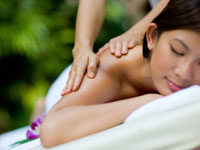 Find the right therapist
 Just as you would with an MD, select a certified massage therapist who meets your specific needs, whether you’re looking to soothe postmarathon aches or relieve a stiff neck. General certification in Swedish massage—long, sweeping strokes over the entire body—fits the bill when you’re simply looking to relax. (Swedish is what you’ll get if you ask for a basic massage; Shiatsu, or acupressure, features more targeted finger pressure in specific areas.) Go here to find the most experienced certified massage therapists in your area.
Speak up!
Before the massage begins, mention any areas of your body that are feeling sensitive, tight, painful, or tender (like a knot in your neck or an achy spot in your shoulder); these should be treated with particular care, according to Leena Guptha, an osteopathic doctor, a licensed massage therapist, and past president of the American Massage Therapy Association.
Most massage isn’t painful, though moderate pressure—which studies have found is necessary to provide optimal therapeutic benefits—may feel a little uncomfortable, especially if you’re new to massage. Is the pressure too intense? Don’t be shy. Guptha suggests saying something like, “That really hurts. Can you try something different or skip this area?” A good therapist should welcome (or even ask for) your input.
Pick your products
It’s acceptable to bring your own lotion or oil, especially if you have sensitive skin, a sensitive nose, or a condition like eczema or psoriasis. Another option: Ask the therapist to show you her product stash and discuss the options (many are fragrance-free). “There are dozens available for different types of massage, and your therapist should have a variety to choose from,” Guptha says.
Reschedule if you have a cold
“Postpone your massage if you feel a cold or migraine coming on,” Guptha says. “The massage will stimulate your circulation, which could leave you feeling worse.” If you’re a little stuffy or just find it difficult to breathe when lying face-down, ask to lie on your side. An experienced therapist can perform most techniques this way, or she can work on your upper back, neck, and shoulders while you’re in a sitting position.
Period? No problem
There’s no medical reason to avoid a massage during your period, Guptha says. In fact, it can ease PMS symptoms like cramps and backache. But if you’re worried about heavy bleeding, just wait a few days.
Tuesday, February 2, 2010
Chiropractic Care and Massage Therapy
Last fall I wrote a short article on combining chiropractic care and massage therapy for pain relief for a health expo's guidebook. Personally, I am a believer in chiropractic. Professionally, I have seen amazing results for clients who received massage before a chiropractic adjustment. They didn't just get pain relief, they got it quickly. I have also seen clients who have plateaued in their massage treatment quickly take their pain relief to the next level when they added chiropractic care.
Millions of people seek chiropractic care or massage therapy to relieve or prevent pain and limited mobility. These two complementary therapies, especially in combination, form a powerful healing approach to relieve pain and increase your body’s mobility and resilience. Over time, they offer an effective way to support your ongoing vitality and well-being.
What is Chiropractic?
Chiropractic is a natural approach to health that is based on the relationship between the nervous system and the function of all the body’s glands, organs and systems. It recognizes the fact that the human body is a self-healing, self-regulating organism that is inherently designed to be healthy.
The nervous system is the body’s master control system and it holds the key to the body’s ability to heal and express itself. Chiropractors understand that the body is continually striving to achieve a state of balance with its environment. Stressors to the body affect its ability to function optimally, causing weaknesses and imbalances. By finding and correcting these imbalances through chiropractic, the body can be restored to health. Some indicators for chiropractic care are headaches, back pain, athletic injuries, whiplash, carpal tunnel syndrome, shoulder problems, TMJ syndrome, sciatica and more.
What are the benefits of massage?
Throughout human history, massage was used for everything from stiff, painful muscles to chronic disease. In China, medical texts refer to it as early as 3000 B.C.
Today massage therapy is being used by a wide range of people as a pain reliever, antidote to stress, and enhancer of athletic performance.
Recent research has shown that massage lowers blood pressure, increases circulation, relaxes muscles and improves range of motion. What's more, it reduces the effects of stress and can ease the impulse to tighten in response to pain. Because of these results, many people are finding that massage helps them heal faster from injuries and disease.
Studies also demonstrate that the benefits of regular massage tend to accumulate, easing long-term tension, conditioning tissues to help prevent injury, and enhancing your ability to breathe more deeply and relax more fully.
Total well-being is the goal
Chiropractic and massage are compatible holistic therapies that share the goal of your total well-being, not simply an absence of illness. Both offer natural, hands-on, drug-free techniques. They can be used as preventive as well as restorative therapies. Both work to resolve the cause of your pain rather than treat isolated symptoms. Used in combination, massage and chiropractic can help you maintain optimum health by relieving pain and stress and enjoying life to the fullest.
Millions of people seek chiropractic care or massage therapy to relieve or prevent pain and limited mobility. These two complementary therapies, especially in combination, form a powerful healing approach to relieve pain and increase your body’s mobility and resilience. Over time, they offer an effective way to support your ongoing vitality and well-being.
What is Chiropractic?
Chiropractic is a natural approach to health that is based on the relationship between the nervous system and the function of all the body’s glands, organs and systems. It recognizes the fact that the human body is a self-healing, self-regulating organism that is inherently designed to be healthy.
The nervous system is the body’s master control system and it holds the key to the body’s ability to heal and express itself. Chiropractors understand that the body is continually striving to achieve a state of balance with its environment. Stressors to the body affect its ability to function optimally, causing weaknesses and imbalances. By finding and correcting these imbalances through chiropractic, the body can be restored to health. Some indicators for chiropractic care are headaches, back pain, athletic injuries, whiplash, carpal tunnel syndrome, shoulder problems, TMJ syndrome, sciatica and more.
What are the benefits of massage?
Throughout human history, massage was used for everything from stiff, painful muscles to chronic disease. In China, medical texts refer to it as early as 3000 B.C.
Today massage therapy is being used by a wide range of people as a pain reliever, antidote to stress, and enhancer of athletic performance.
Recent research has shown that massage lowers blood pressure, increases circulation, relaxes muscles and improves range of motion. What's more, it reduces the effects of stress and can ease the impulse to tighten in response to pain. Because of these results, many people are finding that massage helps them heal faster from injuries and disease.
Studies also demonstrate that the benefits of regular massage tend to accumulate, easing long-term tension, conditioning tissues to help prevent injury, and enhancing your ability to breathe more deeply and relax more fully.
Total well-being is the goal
Chiropractic and massage are compatible holistic therapies that share the goal of your total well-being, not simply an absence of illness. Both offer natural, hands-on, drug-free techniques. They can be used as preventive as well as restorative therapies. Both work to resolve the cause of your pain rather than treat isolated symptoms. Used in combination, massage and chiropractic can help you maintain optimum health by relieving pain and stress and enjoying life to the fullest.
Subscribe to:
Posts (Atom)